Milimani Drilling East Africa
Sustainable Water Infrastructure
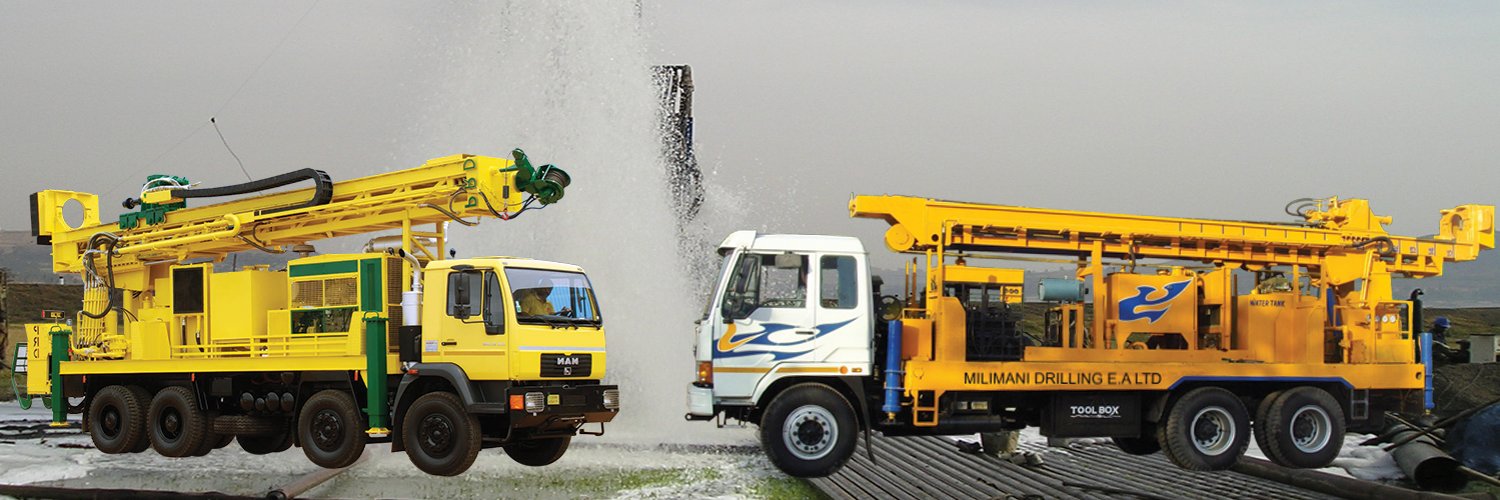
Engineering guide to borehole drilling in Kenya: DTH hammer vs mud-rotary drilling, Class 9/10 UPVC casing, slotted screens, gravel pack, and well development.
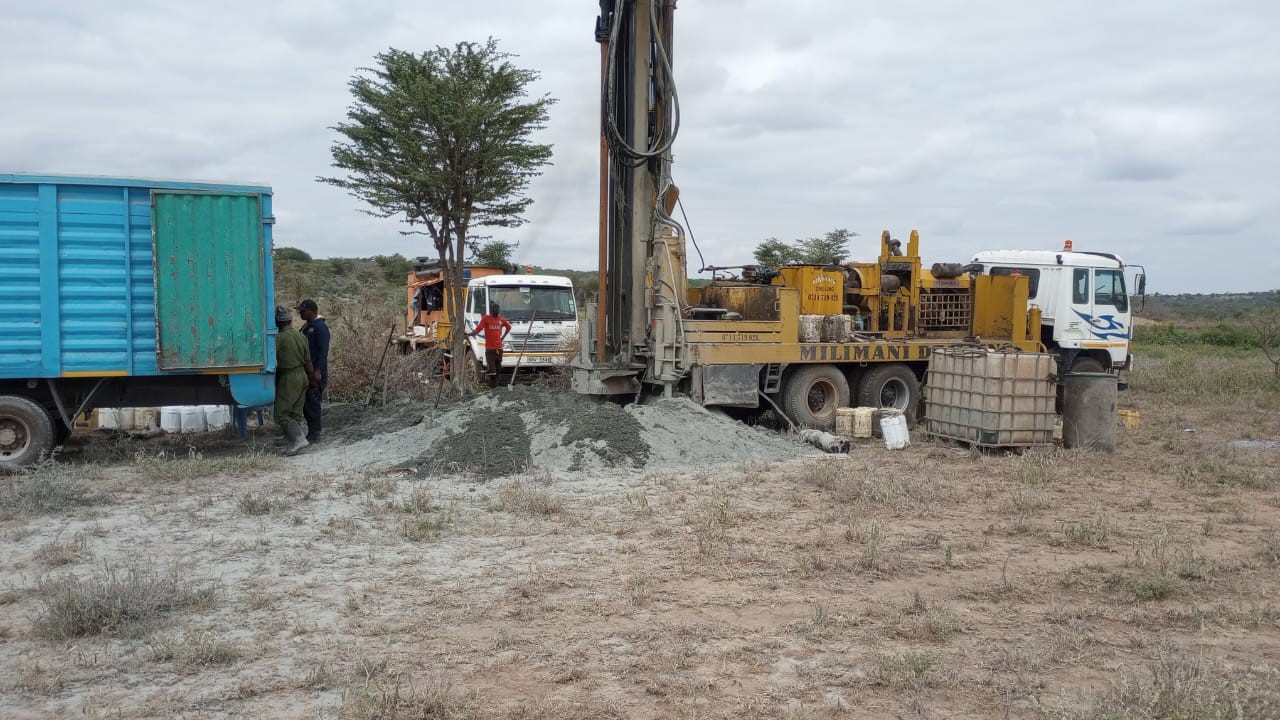
Borehole drilling is an advanced civil and hydraulic engineering discipline. Turning geological potential into a reliable, decades-long groundwater asset requires heavy industrial machinery, appropriate casing design, gravel packing, and thorough physical well development.
A durable borehole is not merely a hole in the ground—it is a precisely engineered subsurface intake structure designed to extract clean, sand-free water from deep geological aquifers without causing casing collapse or borehole sedimentation. In Kenya, ground conditions vary dramatically from soft unconsolidated alluvium in coastal and western counties to dense volcanic basalt, phonolite, and metamorphic granite in the Rift Valley and Eastern Kenya.
DTH hammer drilling utilizes high-pressure pneumatic compressors (typically 25–35 bar) driving a reciprocating tungsten-carbide hammer bit. It pulverizes hard crystalline rock, basalt, and granite with extraordinary speed, using compressed air to lift crushed rock cuttings to the surface. It is the premier method for Kenya's hard-rock volcanic highlands and basement formations.
In soft, sedimentary, collapsing formations (such as river valleys, sandy alluvium, and coastal coral deposits), air drilling can cause the borehole walls to collapse. Mud-rotary drilling circulates specialized bentonite or polymer drilling fluid down the drill pipe, which stabilizes the wellbore walls, cools the tricone roller bit, and brings drill cuttings to surface pits.
To prevent borehole collapse and seal off undesirable shallow groundwater, the borehole is cased. Modern engineering practice favors Class 9 or Class 10 heavy-gauge UPVC casing. UPVC is completely immune to galvanic corrosion, rust, and chemical degradation from saline or acidic groundwater, ensuring a lifespan exceeding 50 years. Mild steel casing is used where extreme overburden pressure requires additional structural reinforcement.
Positioned precisely opposite the water-bearing aquifer zones identified in the drilling log, precision-machined slotted screens allow clean groundwater to enter the well while holding back geological sand and gravel.
The annular space between the drill hole wall and the casing is packed with clean, rounded, graded quartz gravel (typically 2–4mm or 3–6mm). This gravel pack acts as a natural mechanical filter, preventing fine silt from entering the pump intake while stabilizing the formation.
The top 6 to 12 metres of the borehole annulus is sealed with impermeable cement grout or swelling sodium bentonite clay. This forms an impenetrable barrier that stops contaminated surface run-off, animal waste, and agricultural chemicals from seeping down the borehole collar into the aquifer.
Once cased and gravel-packed, drilling is not complete until the borehole undergoes physical development. Using high-pressure air-lifting and surging, drilling mud residues, drill mud cakes, and fine clay particles are flushed out of the aquifer until the water discharges completely clear and sediment-free. Thorough development maximizes borehole yield and protects permanent submersible pumps from abrasive sand damage.