Milimani Drilling East Africa
Sustainable Water Infrastructure
+254 714 719 028 info@milimanidrilling.com
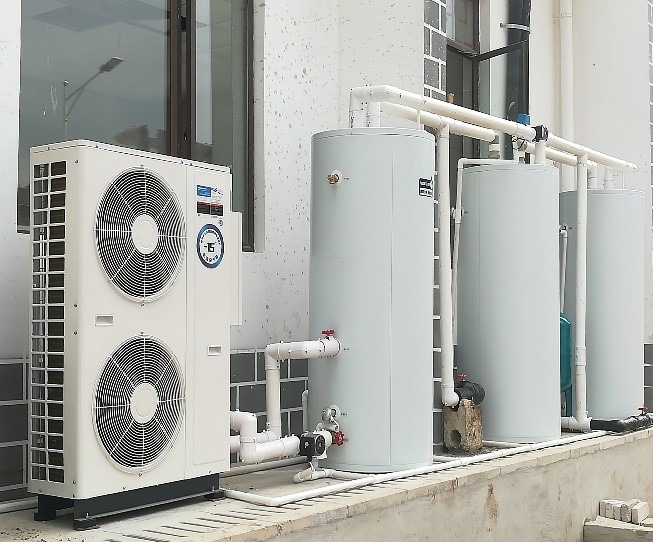
Commercial heat pump water heating installation — compressor units and storage tanks
Milimani Drilling East Africa Ltd · Kenya-wide service

Hot water at a fraction of the usual energy cost, across all 47 counties

A heat pump water heater does not make heat with a resistance element. It moves heat from the surrounding air into your water — delivering three to four units of heat for every unit of electricity used. That makes it three to four times more efficient than a conventional electric heater, with savings of up to 75% on water heating costs. Because it needs so little electricity, a solar PV array can supply much of what it consumes, making it an effective choice for off-grid and reduced-grid-dependency installations.

500+ boreholes20+ years in water servicesNationwide project coverage
Service Overview

Solar Energy & Water Heating: a practical guide for Kenyan projects

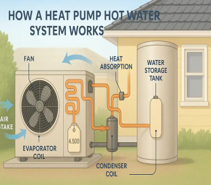
Hotels, guest houses, hospitals, schools and residential homes typically spend a significant share of their energy budget on water heating. An air-source heat pump addresses this directly: it extracts heat from ambient air and transfers it to water via a refrigeration cycle. Even on a cloudy day the air contains enough thermal energy for the system to operate at rated efficiency. No roof-mounted collector is required, and the unit connects to existing plumbing and electrical supply.

Kenya's warm year-round climate supports high heat pump performance across all 47 counties — coastal, highland, arid and semi-arid regions alike. Commercial installations typically recover their capital cost within 18 to 30 months through energy savings. Milimani sizes each system to the specific daily hot-water demand and inlet water temperature, selects appropriate storage capacity, and coordinates installation with commissioning and handover documentation.

Benefits

What a well-planned solar energy & water heating project can deliver

01

Three to four times more efficient than electric resistance heating

A heat pump moves heat rather than generating it. For every kilowatt-hour of electricity consumed, a well-sized system delivers three to four kilowatt-hours of heat to the water — a coefficient of performance (COP) not possible with an immersion element.
02

Up to 75% reduction in water heating costs

Replacing electric geysers or gas boilers with a heat pump system can cut the hot-water portion of an energy bill by 60–75%, depending on inlet water temperature, demand profile and electricity tariff. The saving is measurable and consistent.

03

Compatible with solar PV — ideal for off-grid setups

Because heat pump compressors draw significantly less current than resistance heaters of equivalent output, a modestly sized solar PV array can cover most or all of the heat pump's consumption. This makes the combination particularly attractive for sites with unreliable grid supply or remote locations.

04

No roof space required

Unlike solar thermal collectors, a heat pump unit is ground- or wall-mounted next to the storage tank. Installation does not require roof penetrations or collector mounting, simplifying the structural and logistical scope on most buildings.

05

Works in cloudy and rainy conditions

Air-source heat pumps extract heat from ambient air, not from direct radiation. Performance is maintained in overcast and wet weather — relevant throughout Kenya's highland regions and during long-rain and short-rain seasons.

06

Connects to existing plumbing and electrical supply

A heat pump system is integrated into the building's existing hot-water distribution and electrical circuits. Cold-water supply, pressure, and circuit capacity are confirmed during the site survey; most installations require only straightforward adjustments.

Our Process

From first assessment to handover

01

Site survey and demand assessment

Milimani visits the site to measure daily hot-water demand, assess inlet water temperature and pressure, inspect existing plumbing, confirm electrical supply capacity and identify a suitable location for the unit and storage tank.

02

System sizing and proposal

Based on the survey data, we select compressor capacity, storage volume and, where applicable, solar PV pairing. The proposal includes equipment specifications, estimated installation scope, projected energy savings and an indicative payback period.

03

Supply and installation

Equipment is sourced from vetted manufacturers with local service support. Our installation team handles all mechanical connections, electrical integration and control wiring. Commercial installations follow the manufacturer's commissioning procedure.

04

Commissioning and handover

The completed system is commissioned under load conditions. Water temperatures, system pressures and control settings are verified. The owner or facilities team receives operating instructions, maintenance intervals and emergency contact details.

05

Ongoing maintenance

Milimani provides scheduled maintenance services covering coil cleaning, refrigerant pressure checks, anode inspection in storage tanks and controller firmware where applicable. A maintained system sustains its rated COP and protects the warranty.

Equipment & Technical Scope

Equipment selected for the site and the job

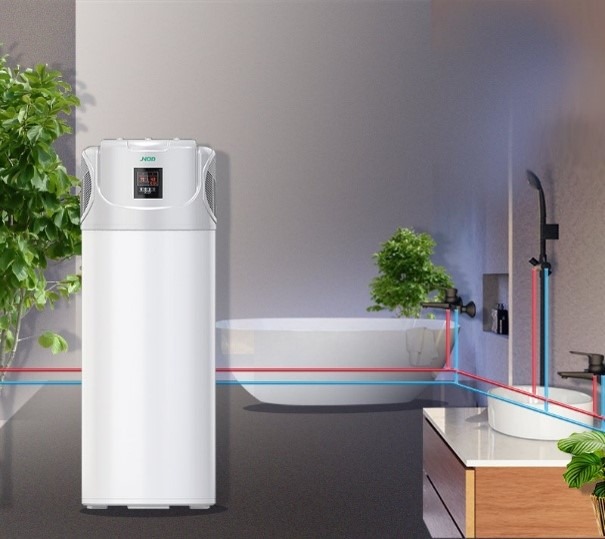
Heat pump units supplied by Milimani are air-source (air-to-water) systems with inverter-driven compressors, R32 or R410A refrigerant circuits, stainless-steel or enamel-coated storage tanks and digital temperature controllers. Units are selected for local ambient temperature ranges and the corrosion environment of the installation site.

Domestic units (150–300 litre tank, 1.5–3 kW compressor) suit homes and small guest houses. Commercial installations (500–3,000+ litres, multiple compressors in a manifolded array) are sized for hotels, hospitals and schools where simultaneous demand requires staged capacity and redundancy.

Planning Advice

Sizing and selecting a heat pump system

Heat pumps produce hot water most economically when they run during periods of low electricity cost or high solar generation, and when the storage tank provides enough volume to carry the overnight demand without the compressor starting in the early morning peak. Controls that shift operation to daytime solar hours, or that use time-of-use tariff programming, measurably improve the financial return.

Maintenance is straightforward. The outdoor coil should be inspected and cleaned of dust and debris every six to twelve months. Refrigerant pressure should be verified annually. Storage tank anodes extend tank life and should be inspected per the manufacturer's schedule. With proper maintenance, a quality heat pump system has a service life of 10 to 15 years.

Technical Considerations

Important decisions for a successful project

Demand calculation

Size the system to daily peak demand, not average demand. Hotels and hospitals have concentrated morning draw-off periods. A system sized only to average daily use will run out of hot water during peak periods regardless of how well it performs overnight.

Inlet water temperature

The colder the incoming water, the more work the heat pump performs per litre. Nairobi highland sites with cold groundwater need slightly larger systems or additional storage compared to coastal sites with warmer mains supply.

Solar PV pairing

A heat pump draws 1–4 kW depending on size. A 2–4 kWp solar array, paired with a timer or smart controller that runs the heat pump during peak generation hours, can cover the majority of electrical consumption. Battery storage is optional; thermal storage in the water tank is often sufficient.

Space requirements

The outdoor unit needs 0.5–1.0 m clearance on all sides for airflow. It should not be placed in an enclosed plant room without adequate ventilation. The storage tank can be located indoors. Confirm layout with the survey team before ordering equipment.

Relevant Experience

Application example: mid-sized guest house

A 20-room guest house with an average occupancy of 14 rooms uses approximately 700 litres of hot water per day. Two 300-litre heat pump units operating primarily during the daytime (powered by a 4 kWp rooftop solar array) replace a bank of 3 kW electric geysers that previously ran on overnight off-peak tariffs. The installation eliminates roughly 12 kWh of electricity consumption per day from geyser loads, equivalent to a monthly saving of approximately KSh 10,000–14,000 at current commercial rates.

The solar array covers 70–80% of the heat pump's electrical consumption on sunny days. During rainy-season periods the heat pump draws from the grid, but the COP of 3.5–4.0 still produces significantly more heat per kWh than the displaced electric geysers. The system continues to save money every month regardless of the weather.

Explore projects and client sectors
Client Feedback

A reliable process matters

“We replaced seven electric geysers with two heat pump units last year. The hot-water bills dropped immediately and the guests have not noticed any difference — except that there is always hot water, even during a full house.”
Property Manager, mid-sized hotelHotel & Hospitality · Client feedback published on this website
Frequently Asked Questions

Common questions about solar energy & water heating

Does a heat pump work at high altitude in Kenya?

Yes. Air-source heat pumps operate effectively up to approximately 2,000 m altitude where Nairobi and many Kenyan highland towns are located. At higher altitudes air density is slightly reduced, which marginally affects capacity; the supplier's specification sheet will confirm rated performance at the relevant elevation. Most residential and commercial installations in Kenya are within the optimal operating range.

How long does installation take?

A standard domestic installation (one unit, one tank) typically takes one to two days. A commercial installation with multiple units, manifolded tanks and electrical upgrades may take three to five days depending on site conditions and the scope of existing plumbing modifications required.

Can a heat pump replace an existing solar thermal geyser?

In most cases, yes. A heat pump can be connected to an existing tank if the tank is in good condition and the appropriate fittings are compatible. Milimani will assess the existing installation during the survey and recommend whether the tank can be reused or should be replaced as part of the upgrade.

Is the system noisy?

The outdoor compressor unit operates at 45–55 dB(A) at one metre — comparable to a refrigerator or quiet air conditioner. Positioning the unit away from bedroom windows and quiet areas is recommended. Most commercial rooftop or plant-room installations are not audible inside the building.

What happens during a power outage?

The heat pump stops when grid power is unavailable (and solar is absent or insufficient). Hot water stored in the tank remains available for use. Systems paired with solar and a battery inverter can continue to run the heat pump during daytime outages. Milimani will discuss backup options during the site assessment.

What warranty is provided?

Equipment warranty terms vary by manufacturer and are stated in the proposal. Milimani's installation workmanship is covered separately. We recommend that clients register the unit with the manufacturer upon commissioning to activate the full warranty period.

Plan Your Project

Discuss your water requirements with our team

Request a heat pump site assessment — provide your daily hot-water demand, number of rooms or occupants, and whether you have an existing solar PV system.